July 10, 2026
Employee Engagement and Safety Culture
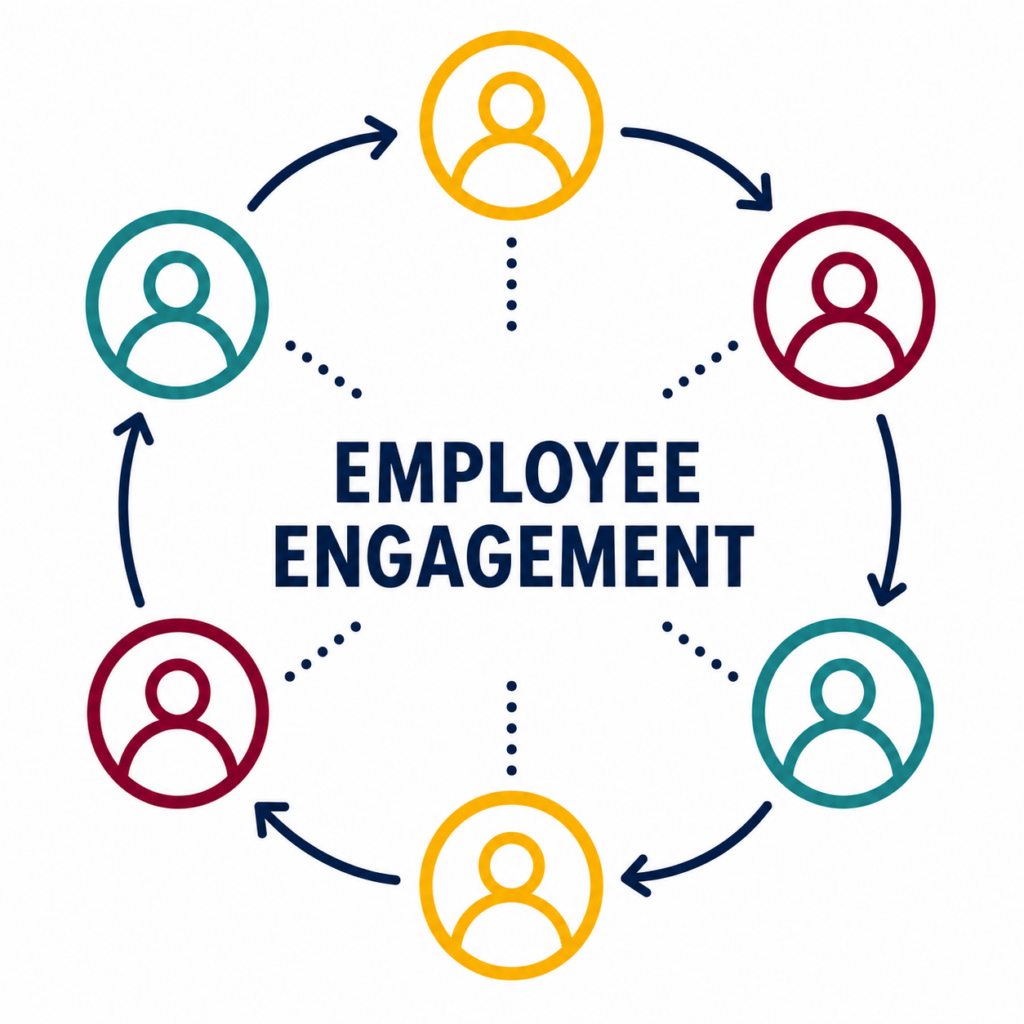
Employee engagement and safety culture are closely connected. When people feel heard, supported, and respected, they are more likely to speak up about risk, follow critical procedures, and help protect the people around them. When trust is low and communication breaks down, even strong safety systems can underperform. For organizations operating in higher-risk environments, improving engagement is not separate from improving safety culture – it is part of how safer decisions and stronger performance are built every day.
How Employee Engagement Influences Safety Culture
Employee engagement is the level of emotional commitment, involvement, and discretionary effort people bring to their work. Safety culture is the shared set of beliefs, norms, and behaviors that shape how safety is understood and acted on across an organization. The two reinforce each other.
Engaged employees are more likely to pay attention, participate in problem-solving, report hazards, raise concerns early, and support coworkers. In a healthy safety culture, people believe safety matters in practice, not just in policy. They trust leaders to listen, respond fairly, and prioritize protection over short-term pressure.
That connection matters because many incidents are preceded by silence, hesitation, unclear expectations, or weak follow-through. If people do not believe their input matters, they may stop sharing what they see. If they feel supported and included, they are more likely to contribute to prevention. This is why organizations that want stronger operational safety should look beyond compliance alone and examine the employee experience behind everyday decisions.
Why this Connection Matters for Organizational Performance
A strong relationship between employee engagement and safety culture supports more than injury prevention. It can influence consistency, retention, decision quality, operational discipline, and the ability to sustain improvement over time.
When employees are engaged, they tend to show stronger ownership of their work. In safety-critical settings, that often translates into better pre-task planning, more reliable reporting, stronger peer accountability, and quicker escalation of weak signals before they grow into serious events. Engagement also supports learning. Teams are more willing to discuss mistakes, examine near misses, and improve processes when the environment feels fair and constructive.
From a business perspective, this can reduce disruption, improve workforce stability, and strengthen execution. High-performing safety cultures are rarely built on rules alone. They are built on trust, clarity, and aligned leadership behavior. That is why employee engagement is not just an HR metric. In many organizations, it is a practical leading indicator of how well the culture supports safe and effective work.
What Strong Employee Engagement Looks Like in a Safety-Focused Organization
In a safety-focused environment, engagement is visible in everyday behaviors rather than slogans. People participate, communicate, and act with a sense of shared responsibility.
- Employees speak up about hazards, uncertainty, and operational pressure
- Supervisors listen, respond, and follow through on concerns
- Teams treat safety conversations as part of doing the job well
- Workers understand why procedures matter, not only what the rules say
- Leaders make decisions that show safety is valued when trade-offs appear
- People believe fair treatment applies after incidents, near misses, and reporting
- Communication flows upward as well as downward
These signals point to a culture where engagement supports safer performance. They also align with common safety culture themes such as trust, accountability, communication, and visible leadership commitment.
Core Factors that Shape Employee Engagement and Safety Culture
Leadership Credibility
Employees watch what leaders do under pressure. If leaders communicate safety priorities but reward speed at any cost, trust declines. Credible leadership creates alignment between message and action. That consistency affects both engagement and safety climate.
Procedural Justice
People are more likely to participate when decisions feel fair. Procedural justice means employees believe processes are consistent, respectful, and not arbitrary. In safety culture, fairness strongly influences whether people report issues and cooperate during investigations or corrective actions.
Perceived Organizational Support
When employees believe the organization genuinely cares about their well-being and values their contribution, engagement rises. In safety terms, support affects whether workers feel protected, resourced, and taken seriously when they raise concerns.
Upward communication
Safety culture weakens when information only flows from the top down. Upward communication allows frontline knowledge to reach decision-makers. This is essential in complex operations where risk signals often appear first at the point of work.
Safety Climate
Safety climate reflects how employees perceive the current priority of safety in their area. It can shift faster than deeper culture, which makes it a useful indicator of whether leadership behavior, systems, and messaging are producing the right daily experience.
How to Measure Employee Engagement and Safety Culture
Measurement should go beyond a generic annual survey. To understand the real connection between employee engagement and safety culture, organizations need data that captures perceptions, behaviors, and operating context.
A practical approach usually combines quantitative and qualitative methods. Surveys help identify patterns at scale across teams, locations, and leadership layers. Interviews and focus groups add context by revealing why people answered the way they did. Site observations, leadership assessments, and operational data can then help validate what the organization is seeing.
Useful measurement areas often include trust in leadership, quality of supervisor relationships, fairness of decision-making, willingness to report issues, confidence in follow-up, and how employees perceive organizational support. These themes help explain whether engagement is contributing to a positive safety culture or whether hidden friction is reducing candor and ownership.
For example, a team may show decent participation in safety meetings while still hesitating to escalate serious concerns. Survey scores alone may not reveal that gap. But when surveys are paired with interviews and leadership feedback, the organization can understand whether the issue is fear of blame, inconsistent supervisor response, or a lack of clarity about decision authority.
Why Combining Quantitative and Qualitative Data Leads to Better Action
Numbers tell you where to look. Conversation tells you what is happening. Both matter.
Quantitative data helps compare business units, identify patterns, and track movement over time. Qualitative data explains the lived experience behind the scores. Without that context, organizations can misread results and design actions that sound good but do not address the real cause.
If employees rate communication poorly, the problem may not be message volume. It may be delayed follow-up, mixed signals from supervisors, or a belief that raising concerns changes nothing. If trust scores differ sharply between sites, interviews may reveal differences in local leadership behavior rather than policy. Combining both types of insight improves prioritization and makes culture change more targeted.
Common Barriers that Weaken Engagement and Safety Culture
- Lack of visible leadership follow-through
- Conflicting priorities between production and protection
- Low trust in reporting and investigation processes
- Poor supervisor communication
- Inconsistent accountability across teams or roles
- Limited employee voice in decisions that affect the work
- Training that explains rules but not risk-based judgment
- Fatigue, overload, or chronic operational pressure
These barriers often show up together. For example, weak communication can lower engagement, which reduces speaking up, which then hides operational risk. That is why treating safety culture as a separate initiative from the employee experience often leads to shallow results.
Practical Ways to Improve Employee Engagement and Safety Culture
Strengthen Supervisor Capability
Frontline leaders shape daily culture more than corporate messaging. Equip supervisors to listen well, ask better questions, coach effectively, and respond consistently when concerns are raised. Strong leader-member relationships build trust and improve both engagement and safety communication.
Make Speaking Up Easier and Safer
Employees should know how to raise concerns, what will happen next, and how the organization protects fair treatment. Simple reporting channels, timely feedback, and visible follow-up all reinforce that employee voice matters.
Connect Safety to Meaningful Work
People engage more when safety is framed as part of professional excellence and care for others, not just compliance. Explain the operational and human impact of safe decisions so procedures feel purposeful rather than administrative.
Improve Fairness in Decision-Making
When employees see inconsistent consequences or unclear processes, trust erodes quickly. Consistency, transparency, and respect are essential if you want people to stay involved after mistakes, near misses, or difficult events.
Build Support into the Operating Environment
Perceived organizational support grows when employees have the tools, time, staffing, and leadership access needed to work safely. Support is not only about benefits. It is about whether the system makes safe work realistic.
Develop Leaders at Every Level
Senior leaders set direction, but culture is carried by leaders throughout the organization. Leadership development should focus on communication, decision-making, accountability, and how leaders respond to weak signals before serious harm occurs.
The Role of Leadership in a Positive Safety Culture
Leadership is one of the strongest drivers of a positive safety culture. Employees judge commitment to safety by the choices leaders make, especially when operations are under strain. This includes what leaders ask about, what they reward, what they challenge, and what they ignore.
Effective leaders create clarity around expectations while also creating conditions where people can be candid. They encourage learning instead of silence, hold standards without becoming punitive, and show that safety is a factor in how success is defined. They also understand that employee engagement depends on relationship quality. People are more likely to contribute, report, and improve when they feel respected by the leaders closest to their work.
For organizations trying to reduce serious injury and fatality exposure, leadership quality is especially important. Critical risks are often managed through judgment, communication, and timely escalation, not only checklists. That is why leadership development is often central to both engagement and safety culture improvement.
How Culture Assessments Support Improvement
Culture change is difficult when the organization is relying on assumptions. Structured assessments provide a clearer picture of where leadership, systems, and employee experience are aligned and where they are not.
For example, Krause Bell Group uses research-based assessment approaches to help organizations examine the cultural conditions behind safety performance. Its Culture Survey is designed to measure factors that are directly relevant to employee engagement and safety culture, including Leader-Member Exchange, Procedural Justice, Perceived Organizational Support, Upward Communication, and Safety Climate. These dimensions help organizations move beyond surface-level engagement questions and identify practical barriers to trust, communication, and safe decision-making.
Krause Bell Group also offers the Safety Leadership 360 Tool, which gathers confidential feedback on leadership dimensions such as Vision for Safety, Credibility, Value for Safety, Influencing Others, Listening to Learn, and Accountability. Used together, these kinds of tools can help leaders understand how their behavior is experienced across the organization and where targeted development can improve culture.
Employee Engagement and Safety Culture in High-Risk Industries
The connection between engagement and safety culture becomes even more important in industries such as manufacturing, oil and gas, mining, pharmaceuticals, transportation, military, and government operations. In these settings, the cost of weak communication or poor decision-making can be severe.
High-risk environments often involve contractors, shift work, complex procedures, changing conditions, and competing operational demands. That means culture cannot rely on posters or annual campaigns. It needs reinforcement through leadership habits, practical systems, and clear expectations at the point of work.
In these contexts, employee engagement supports early identification of risk, better cross-functional coordination, stronger learning after events, and more consistent control of critical exposures. Safety culture strengthens when people do not feel like passive recipients of rules, but active contributors to prevention.
Five Elements of Safety Culture that Support Engagement
People often ask about the 5 elements of safety culture. Different models use different language, but these five elements are consistently useful when viewed through the lens of employee engagement.
- Leadership commitment – employees need to see that safety priorities are real in daily decisions
- Open communication – concerns, ideas, and weak signals must move freely across levels
- Fair accountability – people need confidence that reporting and learning will be handled justly
- Employee involvement – workers should help shape solutions because they understand the work
- Continuous learning – the organization must improve from near misses, observations, and changing risk
These elements align naturally with higher engagement because they depend on trust, participation, and shared ownership.
What are the 5 C’s of Employee Engagement?
The 5 C’s of employee engagement are often described in different ways across organizations, but a practical version for safety culture includes:
- Connection – employees feel linked to their team, leader, and purpose
- Clarity – people understand goals, standards, and how success is measured
- Communication – information flows both ways and concerns are addressed
- Contribution – employees see how their input improves work and safety
- Care – the organization shows genuine support for well-being and performance
When these conditions are present, employees are more likely to stay engaged and participate in building a positive safety culture.
What are the 3 C’s of Safety Culture?
A useful way to think about the 3 C’s of safety culture is:
- Commitment – leaders and teams demonstrate that safety is a real priority
- Communication – information about risk, expectations, and concerns is shared openly
- Consistency – policies, decisions, and behaviors reinforce the same safety values over time
These three conditions are foundational because they shape whether employees trust the system enough to engage fully.
FAQs
* Developed with the support of AI and reviewed by Krause Bell Group Editorial Team