KRAUSE BELL GROUP SAFETY LOOP

A Strategic Model to Reduce Exposure and Prevent Serious Incidents and Fatalities (SIFs)

Krause Bell Group’s Safety Loop is a dynamic feedback model that enables organizations to improve safety and prevent Serious Incidents and Fatalities (SIFs) by aligning leadership, culture, systems, and data. When applied effectively, the results go beyond safety—strengthening leadership, enhancing culture, and building high-performing organizations.
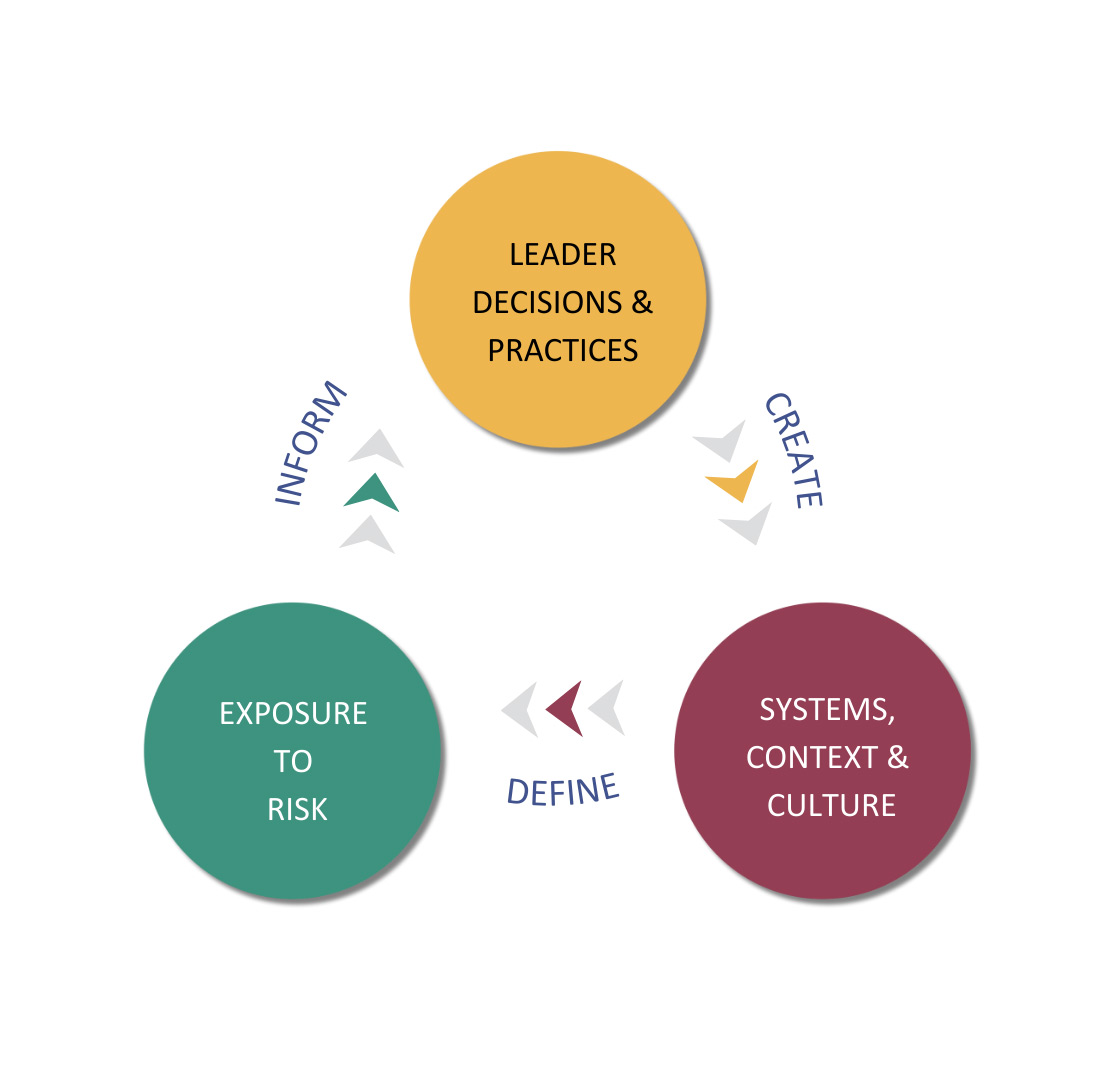
Krause Bell Group Safety Loop

Grounded in decades of research and fieldwork, this model brings the 7 Insights into Safety Leadership to life and demonstrates how they are interconnected.

This starts with Insight 1 – Safety performance builds business performance. This insight is overarching, as it demonstrates that beyond the ethical imperative to work on safety, there are sound business reasons to do so. The key to success, however, is that leaders must understand how this happens—and the Safety Loop reveals this by connecting the six other insights in a practical and actionable way.

The Safety Loop is supported by proprietary tools such as Krause Bell Group’s Safety Leadership 360 Survey, Safe Decision Making® methodology, and Culture Survey.


ACTIVATING THE SAFETY LOOP

Connecting Three Components of Safety

The loop consists of three interconnected elements:

Leader Decisions & Practices

Leaders create the conditions for safety—or for risk.

Leadership decisions and practices are the starting point of the loop. They define strategic priorities, shape daily operations, and influence how safety is understood and enacted across the organization.

Applying Elements of the Model

While it is now widely accepted that leadership is critical to safety—as it is to business performance—Dr. Tom Krause was among the first to explicitly make this connection in the early 1990s. One of the most notable examples of this work came in the aftermath of the 1986 Space Shuttle Columbia explosion. In response, the U.S. government mandated that NASA improve its organizational culture in a measurable way. That effort was led by Dr. Krause and his colleagues, applying early versions of what would later become foundational safety leadership principles.

Today, we’ve extended those leadership insights into decision-making. If leadership is about how leaders interact with their people, decision-making is about what leaders actually do. Through our work—culminating in the Safe Decision Making® methodology—we’ve demonstrated that leadership decisions are just as important, if not more so, than those made by frontline workers and supervisors when it comes to preventing SIFs.

Connected Insights:

Insight 3 – Leadership sets safety improvement in motion.
Insight 7 – Decision-making plays a critical role in SIF prevention.

Solutions and Tools:

.

Systems, Context & Culture

The environment you create determines the outcomes you get

The systems, processes, and culture established within an organization influence how safety is operationalized. This element shapes how risks are perceived, addressed, and—in some cases—normalized.

Applying Elements of the Model

Culture, a key component of this element, is often misunderstood. It’s frequently viewed as a vague or abstract concept, making it difficult for leaders to see how it connects to their daily role. In reality, culture has been extensively studied, and research has identified specific, measurable attributes that are fundamental to both safety and business performance.

  • Perceived Organizational Support
  • Procedural Justice
  • Leader-Member Exchange
  • Safety Climate
  • Upward Communication

We can think of these attributes as part of an organization’s cultural infrastructure—comparable to how physical infrastructure like roads, bridges, or communication networks enable core societal functions. In the same way, cultural infrastructure enables or constrains how work gets done. Once leaders understand how their practices and decisions impact these attributes—and how those attributes, in turn, shape exposure to risk—they are in a much stronger position to take targeted, effective action

Connected Insights:

• Insight 4 – Culture sustains performance, for better or worse.
• Insight 5 – Leaders must understand core safety concepts—especially injury causation.

Solutions and Tools:

  • Krause Bell Group Culture Survey
  • Systems assessment
  • Culture transformation programs

.

Exposure To Risk

You can’t prevent what you don’t understand.

Understanding where and how exposure occurs is essential. Leading organizations prioritize the identification and analysis of SIF precursors—signals that point to underlying risk before harm occurs.

Applying Elements of the Model

This stems from seminal research led by Dr. Tom Krause in 2010, which demonstrated that we had been using the injury triangle incorrectly for decades. In reality, only a subset of incidents has the potential to result in SIF events. Understanding how SIF-potential incidents differ from others is paramount. Despite appearances, they are rarely true ‘black swan’ events—they are typically the predictable result of systemic issues that have gone unnoticed.

Many organizations still focus on frequency metrics or behavioral observations that fail to distinguish between low- and high-consequence exposure. The real opportunity lies in identifying and learning from weak signals—before they result in harm.

Connected Insights:

• Insight 2 – Start with attention to Serious Incidents and Fatalities (SIFs).
• Insight 6 – Understand the role of behavior—not to blame, but to learn.

Solutions and Tools:

  • SIF Exposure Analysis
  • Behavior-based diagnostics with a SIF lens
  • Removing SIF Exposure Pools

.

Closing the Loop

Making It a Cycle of Continuous Improvement

What makes Krause Bell Group’s Safety Loop truly powerful is what happens next.

By analyzing exposure data and understanding how underlying systems and culture contribute to it, leaders are equipped to adapt their behaviors, refine their decisions, and realign their priorities. This creates the final link—closing the loop by bringing it back to the Leadership Decisions and Practices element.

When leaders fully understand and act on the Safety Loop it becomes a self-reinforcing system of learning and improvement. Over time, it creates an upward spiral:

  • Better decisions lead to
  • Healthier systems and culture, which reduce
  • Exposure and SIF risk, enabling

This is how safety becomes not only a moral obligation, but a strategic driver of culture and business performance.

ACTIVATING THE SAFETY LOOP

Addressing Challenges and Driving Results

What Challenges Does the Safety Loop Address?

Krause Bell Group’s Safety Loop helps leaders address the following challenges:

  • Leadership intent is disconnected from operational reality
  • Safety efforts lack strategic alignment and long-term impact
  • Exposure data is underused or misinterpreted
  • Safety programs focus on symptoms rather than root causes
  • Leaders understand individual safety concepts, but struggle to apply them in an integrated way
  • Improvement efforts are siloed, missing the reinforcing effect of leadership, culture, and decision-making working together

What Are the Benefits of the Safety Loop?

The Safety Loop provides the following benefits:

  • Turns safety from a compliance obligation into a strategic advantage
  • Builds leadership capability to influence culture and reduce risk
  • Enables data-driven, forward-looking decisions on exposure and SIF potential
  • Creates a shared language across functions, levels, and disciplines
  • Helps leaders assess current gaps and prioritize what matters most
  • Offers a comprehensive roadmap to guide improvement efforts—and avoid fragmented or tactical solutions
  • Strengthens both safety performance and business outcomes through a unified leadership approach

If you are interested in learning more about applying the Safety Loop to your organization,
contact us for a consultation.