July 31, 2026
Safety Culture Examples
Strong safety culture is not built through posters, slogans, or policy binders alone. You see it in the decisions people make, the conversations leaders create, and the actions teams take when risk is real. If you are looking for safety culture examples, the most useful ones are practical, observable, and tied to everyday work.
In high-risk environments, a good safety culture shows up when people speak up early, verify critical steps, stop work when something feels wrong, and treat incidents and near misses as opportunities to learn. A poor safety culture does the opposite. It normalizes exposure, discourages questions, and rewards speed when caution is needed. Below, you will find positive safety culture examples, negative safety culture examples, and clear ways to recognize what a culture of safety looks like in practice.
What are Examples of Safety Culture?
Examples of safety culture are the visible behaviors, systems, and habits that show how seriously an organization takes risk. They are not limited to written rules. They include how leaders respond to concerns, how teams handle uncertainty, and whether critical controls are followed under pressure.
An example of safety culture could be a supervisor pausing a job because isolation steps were not independently verified. Another could be a frontline team holding a short learning huddle after a near miss to understand what made the error possible. In a healthy culture, these actions are normal, supported, and expected.
- Employees use stop-work authority without fear of blame
- Leaders ask questions about exposure before discussing production
- Near misses are reported quickly and reviewed for learning, not punishment
- Critical controls are checked in the field, not assumed to be in place
- Teams openly discuss what could cause serious injury or fatality, not just minor incidents
These examples of culture of safety matter because they show whether safety is truly embedded in operations rather than treated as a compliance exercise.
Positive Safety Culture Examples
Positive safety culture examples are easiest to spot when work is complex, time-sensitive, or high consequence. That is when culture becomes visible. In strong organizations, safety is integrated into planning, leadership behavior, operational discipline, and learning.
1. Stop-Work Authority is Real and Used
In a positive culture, people can pause work when conditions change, controls are missing, or the plan no longer fits reality. The key is that this happens without retaliation. If workers believe stopping a task will hurt their standing, the policy exists only on paper.
2. Leaders Verify Critical Controls in the Field
Good safety culture examples often include leaders who regularly check whether high-risk controls are working as intended. Instead of asking only whether the job is on schedule, they ask whether line-of-fire risks, energy isolation, confined space controls, or permit conditions are actually in place.
3. Near Misses Trigger Learning Teams
Organizations with a strong culture do not wait for a recordable injury to learn. They treat near misses and weak signals as valuable data. A learning team brings together the people closest to the work to understand what happened, what made sense at the time, and what conditions need to improve.
4. Safety is Discussed in Operational Decisions
Another example of safety culture is when meetings end with a short discussion of safety impact, especially before changes in staffing, schedule, equipment, or workflow. This keeps risk visible during normal business decisions instead of separating safety from operations.
5. Peer Checks are Part of High-Risk Work
In high-risk settings, strong teams often use peer checks before critical steps. For example, in utilities work, one person may verify isolation and grounding steps while another confirms the checklist and field condition match. This reduces overconfidence and catches drift before exposure occurs.
6. Supervisors Invite Concerns Early
Good safety culture examples include supervisors who actively ask, “What are we missing?” or “What could hurt someone here?” This sounds simple, but it changes the quality of conversation. People are more likely to raise uncertainty when leaders create psychological safety.
7. Training is Tied to Real Exposure
Strong organizations do not rely on generic refresher training alone. They connect training to the hazards teams face now, the decisions they must make, and the controls that prevent serious outcomes. That makes safety more credible and more useful.
8. Safety Data is Used for Improvement, Not Just Reporting
Positive safety culture examples also include organizations that look beyond lagging indicators. They pay attention to trends in observations, control verification, quality of reporting, leadership behavior, and recurring operational pressures that increase exposure.
Examples of Culture of Safety by Industry
Safety culture looks different across industries because the work is different. The principles stay consistent, but the behaviors and controls need to match the operating reality.
Utilities
A strong culture of safety in utilities can include documented switching steps, peer verification before re-energization, and field discussions about what could fail if a step is skipped. The culture is visible when teams treat isolation as a critical control rather than a routine task.
Chemicals and Process Operations
In chemicals, good safety culture examples often include weekly learning huddles around line-of-fire exposure, process deviations, permit quality, and barrier effectiveness. Teams do not just review incidents. They talk about the conditions that could allow one.
Healthcare
In healthcare, an example of safety culture may involve co-designing lift protocols with staff and placing equipment where safe patient handling is practical, not burdensome. This is important because culture improves when safe work is easier to do consistently.
Manufacturing
In manufacturing, a positive safety culture might include pre-task discussions before maintenance, lockout verification by more than one person, and supervisor follow-up on recurring production pressures that cause workers to bypass safe steps.
Transportation and Logistics
For transportation teams, examples of safety culture can include route risk reviews, fit-for-duty conversations, immediate reporting of vehicle defects, and management decisions that do not pressure operators to trade safety for schedule.
Negative Safety Culture Examples
Negative safety culture examples are just as important because they reveal where serious risk can build quietly. A poor culture is not always loud or dramatic. Sometimes it looks efficient on the surface while critical warning signs are ignored underneath.
Work Continues When Conditions No Longer Match the Plan
If teams keep going after a scope change, equipment issue, or control failure without reassessing risk, that is a clear sign of weak culture.
People are Blamed Instead of the System Being Examined
When incident reviews focus only on who made the mistake, the organization loses the chance to understand workload, design, supervision, communication, or competing priorities.
Production Pressure Consistently Overrides Caution
Poor safety culture examples often include phrases like “just get it done” or “we have always done it this way.” Over time, this normalizes shortcuts.
Reporting is Low Because Trust is Low
If near misses are rarely reported, that does not automatically mean operations are safe. It may mean employees do not believe speaking up is worth the risk.
PPE and Procedures are Present, But Not Dependable
Another negative example is when required controls exist but are poorly maintained, difficult to access, or not reinforced by leaders in daily work.
Leaders Talk Safety But Do Not Model It
People watch what leaders do more than what they say. If leadership creates culture, then leaders who ignore standards, skip verification, or downplay concerns send a signal the culture follows quickly.
Good Safety Culture Examples Compared With Poor Safety Culture Examples
| Area | Good Safety Culture Examples | Poor Safety Culture Examples |
| Speaking up | Employees raise concerns early and are thanked for it | Employees stay silent to avoid blame or delay |
| Leadership behavior | Leaders verify controls and ask about exposure | Leaders focus mainly on output and deadlines |
| Incident learning | Near misses are reviewed to improve systems | Events are reduced to worker error |
| Operational change | Teams reassess risk when conditions shift | Work continues even when the plan no longer fits |
| Use of authority | Stop-work authority is normal and protected | Stopping work is discouraged or penalized |
| Training | Training reflects current exposure and decisions | Training is generic and disconnected from work |
The 5 Characteristics of a Strong Safety Culture
Many people searching for safety culture examples also want to know what makes a positive safety culture. While language varies, five characteristics appear again and again.
Leadership Credibility
Leaders show through action that safety matters when tradeoffs are real.
Employee Involvement
The people closest to the work help identify risk, improve controls, and shape safer operations.
Learning Orientation
The organization studies weak signals, near misses, and normal work to reduce exposure before serious events happen.
Operational Discipline
Critical controls are clearly defined, understood, verified, and reinforced in the field.
Trust and Accountability
People are expected to speak up, follow controls, and learn from events in an environment where fairness is visible.
What are the 4 types of Safety Cultures?
One common way to explain safety culture maturity is through four broad patterns. Different models use different labels, but the idea is similar.
Reactive
Safety gets attention after someone is hurt or after a major failure. The organization responds to events rather than anticipating them.
Dependent
Safety relies heavily on supervision and rules. Compliance may improve, but ownership stays concentrated at the top.
Independent
Individuals take personal responsibility for working safely. This is an improvement, but it can still miss system weaknesses.
Interdependent
Teams actively protect one another, speak up across levels, and work together to strengthen controls. This is where many of the best positive safety culture examples are found.
The 5 Elements of Safety Culture in Practice
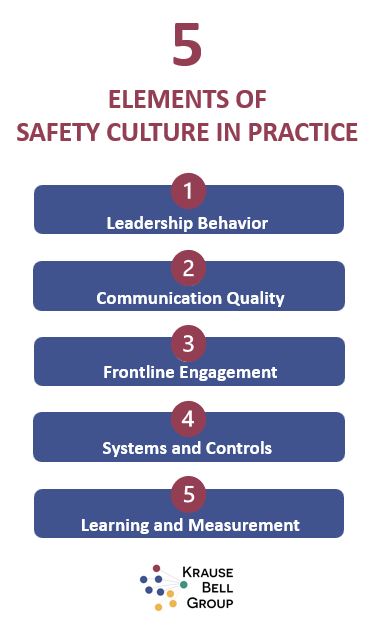
If you want to move from theory to action, focus on five practical elements that can be observed and improved.
- Leadership Behavior – what leaders reinforce, verify, and prioritize
- Communication Quality – whether concerns, changes, and lessons flow clearly across levels
- Frontline Engagement – how much workers shape safety decisions and risk controls.
- Systems and Controls – whether procedures, barriers, and safeguards work in real conditions
- Learning and Measurement – how the organization uses data, feedback, and events to improve
These elements are especially important in high-risk industries where serious injury and fatality prevention depends on both culture and operational discipline.
How to Create More Positive Safety Culture Examples in Your Organization
If you want more good safety culture examples inside your own business, the goal is not to copy another company exactly. The goal is to strengthen the behaviors and conditions that make safe decisions more likely in your environment.
Start with Critical Risk, Not Generic Messaging
Focus first on the exposures that could lead to serious harm. This helps teams connect culture to real consequences, not abstract ideals.
Measure Leadership Behavior
Culture changes faster when leaders receive clear feedback on how their decisions, communication, and follow-through are experienced by others. This is one reason many organizations use structured assessments to understand where leadership supports culture and where it weakens it, including how to measure safety culture.
Build Learning Into Normal Operations
Use learning teams, field observations, and post-job reviews to understand how work is actually performed. This creates stronger examples of culture of safety than annual campaigns alone.
Make Critical Controls Visible
When teams know which controls matter most and verify them consistently, culture becomes practical. This is especially important for serious injury and fatality prevention.
Connect Culture, Systems, and Data
Safety culture improves when leadership, work systems, and performance data are viewed together. Looking at only one of these in isolation can hide important risk patterns.
FAQ About Safety Culture Examples
* Developed with the support of AI and reviewed by Krause Bell Group Editorial Team