The Krause Bell Group Culture Survey
THE KRAUSE BELL GROUP CULTURE SURVEY
Where the Science of Culture Meets the Reality of Safety
Culture is more than values featured on a poster or listed on a website. At the heart of every high-performing organization lies a culture that fosters trust, open communication, and a shared commitment to safety.
When leaders set out to improve safety, they often focus narrowly on safety-specific programs, rules, or messages. Both research and our experiences show that this narrow focus isn’t enough. True safety excellence emerges when both the organizational environment and the safety mindset are strong and aligned.
The Krause Bell Group Culture Survey draws on research-based scales that have been scientifically validated or extensively tested to reveal how workplace dynamics shape safety outcomes. It is designed to help organizations align leadership behaviors, communication patterns, and policies to support the objective of protecting people, with a focus on serious injuries and fatalities (SIFs).

LEVERAGING CULTURE TO BUILD A SAFER, SMARTER ORGANIZATION
A Culture Survey Built on Five Scientifically Validated Culture Scales
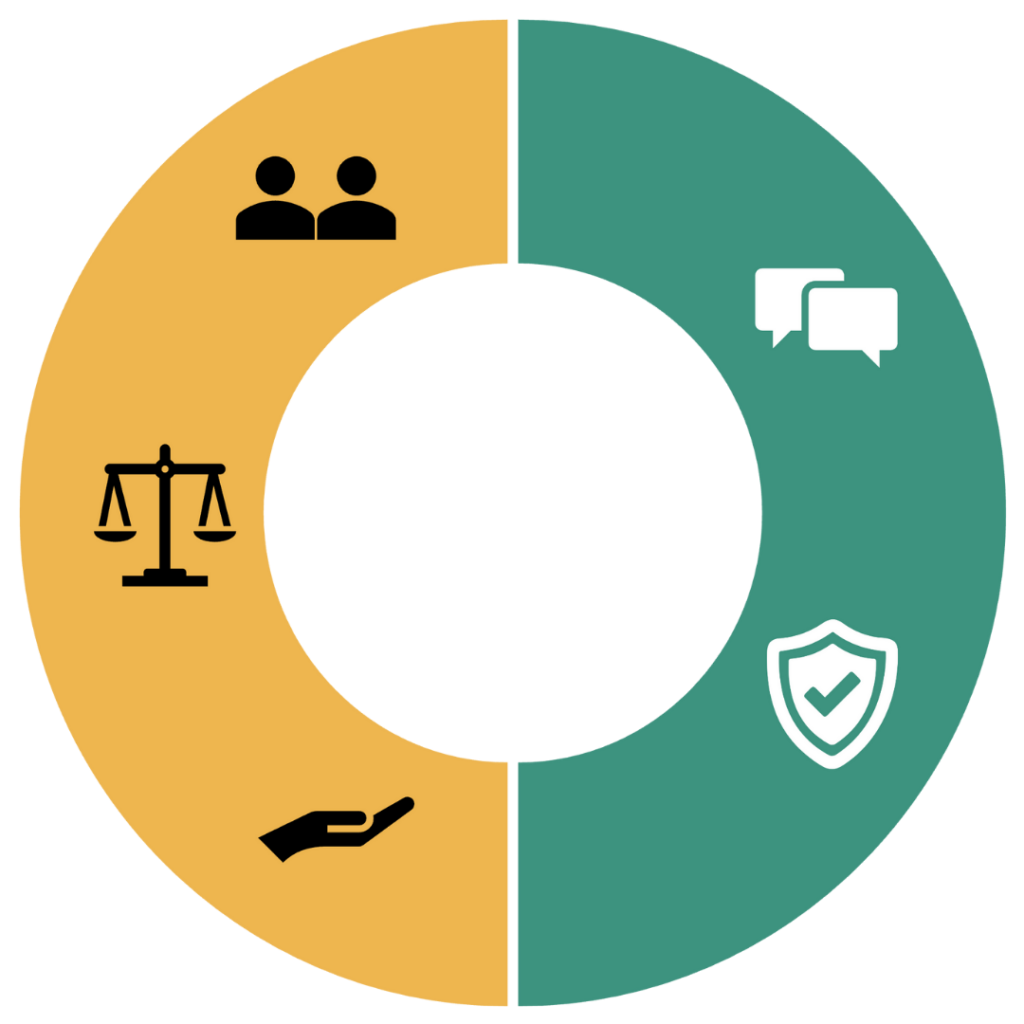
Grounded in decades of organizational research and extensive testing, our Culture Survey incorporates five core scales. Together, these measures provide a robust, comprehensive picture of your organization’s culture—offering actionable insights that can transform both safety and business performance.
ORGANIZATIONAL FUNCTIONING



SAFETY FUNCTIONING


We can think of these five attributes as part of an organization’s cultural infrastructure—comparable to how physical infrastructure like roads, bridges, or communication networks enable core societal functions. In the same way, cultural infrastructure enables or constrains how work gets done.
When it comes to safety, many culture assessment tools focus primarily on safety- specific scales such as Upward Communication and Safety Climate. By including Perceived Organizational Support, Leader-Member Exchange, and Procedural Justice, Krause Bell Group can also evaluate overall organizational functioning. These three additional scales, while not safety-specific, have demonstrated to be predictive of safety performance. Indeed, these scales are fundamental to creating overall trust and mutual respect in the organization, which is crucial for a strong safety performance. It defines the difference between an organization with a strong, effective cultural infrastructure, and one with critical gaps.
KRAUSE BELL GROUP’S CULTURE SCALES
How the Scales Drive Organizational and Safety Improvements
Each of the five scales contributes to a stronger culture and safer, more successful organization overall. When working on safety improvement, most leaders think of culture in safety specific ways. However, research has found that focusing on safety and ensuring employees and leaders think and act in ways that support safety is not enough for strong safety performance. In our work, we make a distinction between two key elements:
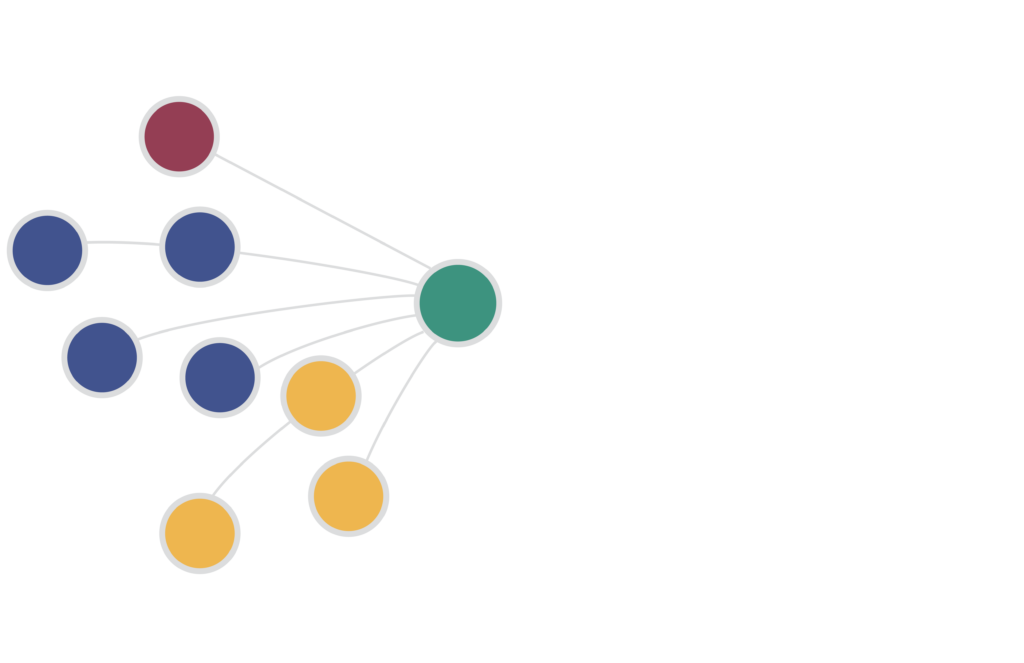
- Organizational Functioning: This looks at how employees and leaders work – or function – together in ways that demonstrate mutual trust and respect. In an organization where this is missing, we can still indicate the importance of safety, but the response from the workforce will be very limited. Three of the five cultural attributes that we look at are parts of organizational functioning: Leader-Member Exchange, Procedural Justice, and Perceived Organizational Support.
- Safety Functioning: This looks at how all employees and leaders within an organization think about safety and what their role in safety improvement is. This is equally fundamental as it provides the focus on safety you need. Here, we look at two scales: Upward Communication and Safety Climate.
LEADER-MEMBER EXCHANGE, PROCEDURAL JUSTICE, PERCIEVED ORGANIZATIONAL SUPPORT
Three Scales Focused on the Elements of Organizational Functioning
Our team has deep experience across multiple industry segments including manufacturing, oil and gas, mining, pharmaceuticals, transportation, military, government, and more. They leverage Krause Bell Group’s innovative approaches and proprietary research to help clients prevent Serious Injuries and Fatalities, reduce injury rates, and improve business results.

Leader-Member Exchange (LMX) – The Power of Relationships
Leader-Member Exchange is the relationship between leaders and team members. This scale measures employees’ confidence that their supervisors are acting in their best interests.
High quality relationships foster mutual respect, open dialogue, a spirit of mutual reciprocity, and a greater willingness to speak up—conditions that are essential for identifying and addressing safety risks before they escalate. The quality of these relationships affects everything from motivation to accountability. A higher frequency of safe behavior is also observed when LMX is strong within organizations.

Procedural Justice (PJ) – Fairness in Action
Procedural Justice quantifies perceptions around transparency and fairness of the processes used to make decisions. It’s not just the decisions that are made (e.g. who gets overtime, how promotions are awarded, who gets preferred time off, who is assigned undesirable jobs/tasks). It emphasizes how decisions are made and if they are made with fairness, consistency, transparency, and respect.
Procedural Justice is especially important in safety-sensitive environments where accountability is critical. When Procedural Justice is high, employees feel respected and heard, people speak up about safety issues, near-misses are reported and discussed, and employees engage in discretionary safety behaviors such as helping others and stopping work.

Perceived Organizational Support (POS) – Feeling Valued or Cared For
Perceived Organizational Support measures how much the organization cares about its team members, their success, and well-being. It includes the employees’ perceptions of fairness, supervisor support, organizational rewards, and favorable job conditions. High Perceived Organizational Support has been linked to proactive safety behaviors, such as helping others work safely and going beyond the minimum requirements. Perceived Organizational Support helps build employee loyalty.
When employees believe their organization values their contributions and cares about their well-being, engagement and discretionary effort go up. Employees who feel supported are more likely to stop a job they believe is unsafe, while employees who feel unsupported may not say anything even when they see a serious risk. Other positive outcomes include higher safety engagement, increased trust, and a stronger culture.
UPWARD COMMUNICATION AND SAFETY CLIMATE
Two Scales Emphasizing the Elements of Safety Functioning
Our team has deep experience across multiple industry segments including manufacturing, oil and gas, mining, pharmaceuticals, transportation, military, government, and more. They leverage Krause Bell Group’s innovative approaches and proprietary research to help clients prevent Serious Injuries and Fatalities, reduce injury rates, and improve business results.

Upward Communication (UC) – Speaking Up and Being Heard
Upward Communication measures how information and messages about safety flow freely through the organization. It emphasizes how easy or difficult it is for an individual to communicate their safety concerns to more senior leaders. A culture that encourages employees to raise concerns and share ideas without fear of reprisal is one that prevents accidents and improves systems.
Our Upward Communication scale assesses how effectively information flows from frontline staff to leadership, enabling quick, informed responses to emerging challenges. Effective Upward Communications requires commitment to having concerns surfaced and sharing the action being taken—even if it’s just that the concern was received and is being considered.

Safety Climate (SC) – The Pulse of Safety, Right Now
Safety Climate is a leading indicator providing insight into how employees experience the organization’s value for safety. It measures employees’ perceptions of how their workplace approaches safety, the perception of “how safety feels around here right now,” and is an important predictor of actual safety behaviors and outcomes.
While culture can take time to change, Safety Climate is a lever leaders can use for immediate impact. It is highly responsive to changes in policies, events, and even leadership. Leaders who want to improve the Safety Climate in their organization should first evaluate their words and actions. Are they walking the talk? Are actions, behaviors, and decisions that support safety improvement rewarded and reinforced?
CONCLUSION
Actionable Results that Drive Culture Change
The Krause Bell Group Culture Survey evaluates your organization’s culture, leadership, and drivers of safety against each of these five scales.
Grounded in decades of research, data, and real-world testing, these scales quantify how the individual, the work, and the environment connect to create culture and impact frontline safety. They not only identify areas for safety improvement, but also positively impact workgroup efficiency and performance, quality, customer satisfaction, employee engagement, and absenteeism.
The ability of the scales to predict critical organizational and safety outcomes makes the Krause Bell Group Culture Survey the ideal solution for any leader who wants to improve safety performance, build culture, and drive meaningful organizational change.