March 20, 2026
Falls From Height SIF Exposure: What To Track, Why It Matters, And How To Reduce It
Falls from height remain one of the most common paths to serious injury and fatality. If you only track recordables, you will miss the exposures that actually kill or disable people. This guide shows you how to focus on the right signals – SIF exposures tied to work at height – so you can find the real precursors, verify critical safeguards, and reduce your most severe risks with discipline.
Why recordable rate alone does not show your real risk
Total Recordable Incident Rate can trend down while your exposure to high-energy events stays the same or even grows. TRIR mixes paper cuts with potentially life-altering events, so it often hides the true risk of falls from height. If you optimize to reduce minor injuries, you can create a false sense of safety while people remain exposed to leading-edge work, unprotected openings, and incomplete guardrails.
Use your recordable rate as a lagging indicator, not a decision driver. Ask what it is not telling you. If your teams celebrate low injury counts without discussing high-energy work, inspections of fall protection, or near misses at height, you have a gap. Treat that gap as a leadership opportunity to focus on exposures that can produce a Serious Injury or Fatality. For a proven framework to prioritize high-risk exposures, see the Serious Injury and Fatality (SIF) prevention foundation.
What is a SIF and a SIF-potential event?
A Serious Injury and Fatality is an actual event that results in a fatality, life-threatening or life-altering injury. A SIF-potential event is any event or situation where a person was exposed to high-energy hazards with a credible chance of a serious outcome if conditions or timing had been slightly different.
For work at height, SIF-potential criteria include credible fall distances, insufficient edge protection, incorrect anchor points, improper tie-off, missing covers on holes, or incompatible equipment. Example: you observe a worker standing within 2 feet of an unprotected leading edge at a 12-foot elevation without being tied off. Nothing happened this time, but the exposure is clear and the plausible outcome is severe. That is a SIF precursor you must track and learn from.
Shift your focus to SIF exposures
Count and learn from actual SIFs, SIF-potential events, near misses, and observations that reveal high-energy exposure. Integrate these into your daily management system so supervisors and crews routinely identify, record, and remove SIF precursors at height. When you normalize exposure-based learning, you shrink the space where serious harm can occur.
For curated guidance and tools, explore our thought leadership library.
How to evaluate total SIF exposure for work at height
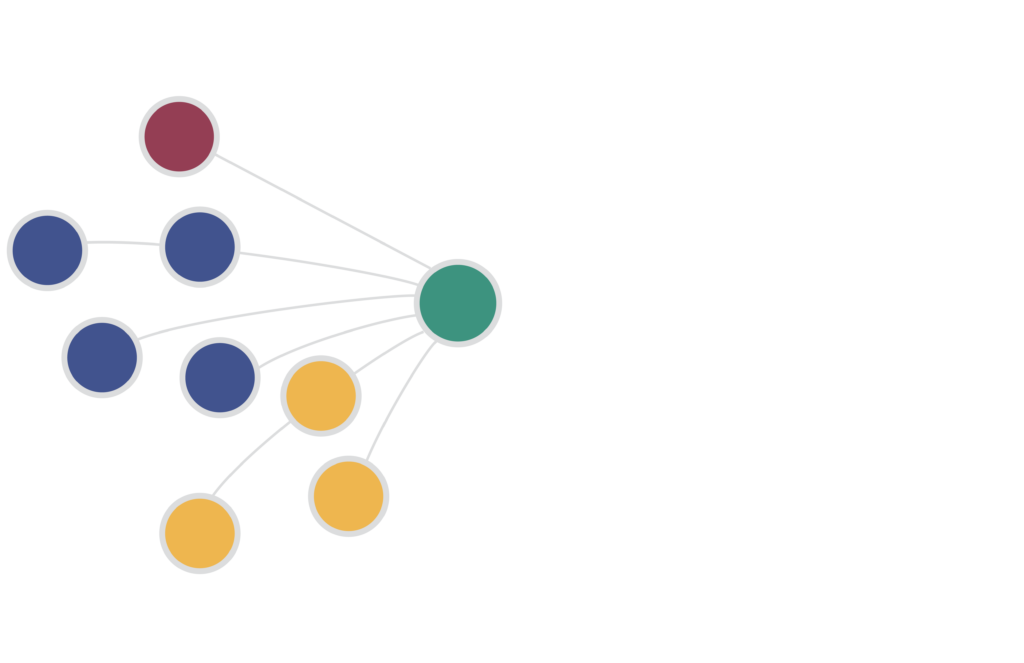
Build a complete picture of your falls from height SIF exposure by drawing from multiple sources and applying a consistent screen. Use the SIF Precursor model [FC1] to analyze and control exposure systematically.

*A high-risk task is sufficient to create a high-risk
situation. Amplifiers simply increase the likelihood of
an incident or the severity when it happens.
Use multiple data streams
- Incident investigations – code for SIF actual and SIF-potential, not just injury severity.
- Near miss reports – emphasize credible exposures at height, whether or not someone was injured.
- Field observations – structured verifications of leading edges, anchors, tie-off, guardrails, and covers.
- Permits and pre-task plans – capture height-related steps and safeguards before work begins.
- Equipment inspections – harnesses, lanyards, SRLs, scaffolds, MEWPs, and anchor points.
Screen with three questions to understand the SIF Precursor
- Was there high energy present? For height, consider any exposure above your defined threshold where a fall could be severe.
- Were critical safeguards missing or degraded? Examples include no tie-off, improper anchor, damaged equipment, incomplete guardrails, or missing hole covers.
- What specific conditions were present that amplified the risk? Examples include multiple teams working at the same location, high wind speeds, or new employees.
Apply the screen consistently
Train supervisors to use the same criteria across projects. Document examples and gray areas so teams learn what qualifies. Rate each exposure by potential severity and likelihood, then prioritize corrective actions that remove or robustly control the exposure. Close the loop by verifying that safeguards are in place and effective on the next job step, not just on paper.
Common SIF precursors for falls from height
- Work at a leading edge without protection – no guardrail, no tie-off, or incorrect tie-off while installing decking, sheathing, or panels.
- Unprotected floor openings and skylights – incomplete covers or covers not capable of supporting required loads.
- Incompatible or inadequate anchors – anchors not rated, improperly located, or obstructed by sharp edges.
- Improper use of ladders or scaffolds – overreaching, unsecured ladders, missing toeboards or midrails.
- Mobile Elevating Work Platform (MEWP) and roof edge interactions – basket gates open, standing on rails, or driving near edges without protection.
- Complex lifts or installs near edges – moving materials that shift center of gravity and pull workers off balance.
- Weather and surface conditions – wind, ice, or slick surfaces that make slips at height more likely.
Treat these as default SIF precursors. Where any appear, escalate verification, escalate supervision, and escalate the requirement to prove safeguards are effective before starting or continuing work.
Implementation playbook to launch a falls-from-height SIF tracking program
Before you launch, align your approach using these 10 questions for your SIF elimination plan.
- Secure leadership commitment – define why you are shifting to SIF exposure management and set a visible expectation to learn from high-energy work, not hide it.
- Define scope and thresholds – align on what counts as work at height on your sites, the minimum height threshold, and the approved systems of protection.
- Align on SIF terms – document clear definitions for SIF actual, SIF-potential, precursor, exposure, and critical safeguard.
- Integrate into existing processes – add SIF exposure checks to pre-task plans, permits, daily huddles, and last-minute risk assessments.
- Build simple reporting pathways – enable quick capture of SIF-potential observations with photos and standardized fields for hazard, safeguard status, and immediate correction.
- Train supervisors and crews – practice the three-question screen using real photos from your sites. Calibrate judgments and decide as a group what qualifies.
- Investigate exposures, not just injuries – when you find a SIF-potential at height, analyze the precursors and system factors that let the exposure exist. Focus on safeguards, planning, and verification, not blame.
- Verify and learn – assign owners, implement fixes, and verify effectiveness in the field. Share brief learnings across crews and projects within 48 hours.
Operational tips
- Visual controls – tag incomplete edges and holes so no one can mistake them for safe areas.
- Permit-to-work triggers – require a permit or elevated review for any deviation from standard tie-off or guardrail plans.
- Stop-work empowerment – make it easy and expected to pause work when exposure appears. Recognize crews who surface issues early.
- Supplier and subcontractor alignment – embed SIF definitions, verification steps, and KPI reporting into contracts and kickoff meetings.
- Technology leverage – use photo checklists, digital permits, and dashboards that flag repeated height exposures by location or task.
KPIs for falls-from-height SIF exposure
Track a blend of leading and lagging indicators that reflect exposure, safeguards, and learning speed. Calibrate targets to drive quality, not paperwork. Visualize and act on these measures with Dashboards for SIF prevention.
Leading indicators
- Verified critical safeguards at height – percent of planned leading edges with complete guardrails, certified covers, or 100 percent tie-off verified before work.
- Timely closure of SIF-potential actions – percent corrected within a certain timeframe.
- Training and calibration – percent of supervisors assessed competent in recognizing SIF precursors with periodic recertification.
- Learning distribution – time from exposure discovery to shared learning across similar crews or sites.
- Quality of observations – ratio of high-quality SIF-potential reports with photos and safeguard status to total observations.
Lagging indicators
- SIF actuals related to falls from height – count and severity trend.
- SIF-potential rate at height – exposures per 10,000 work hours at height, trended by task or location.
- Repeat exposures – percentage of SIF-potential categories repeating within 90 days.
Practical tool: Map exposures to critical safeguards
Use this simple matrix to guide planning, verification, and discussions during pre-task briefs.
| Height hazard | Typical exposure | Critical safeguard | Verification frequency |
| Leading edge | Decking near edge | Completed guardrail or 100 percent tie-off to rated anchor | Before start, hourly during change, after breaks |
| Floor openings | Uncovered holes or skylights | Engineered covers labeled and secured, or guardrails | Before start and after material moves |
| Ladders | Access to elevated work | Secured ladder, 3 points of contact, no overreach | At setup and supervisor spot checks |
| Scaffolds | Install and use | Inspected components, complete rails, proper access | Daily pre-use and after modifications |
| MEWPs | Work near roof edges | Harness to approved anchor, gate closed, firm footing | Pre-use and task change |
Case examples and lessons learned
In organizations that track falls from height SIF exposure, a few patterns recur. First, many exposures surface outside of formal audits – they are found during routine work when crews feel safe to speak up. You can accelerate identification by praising early detection and quick correction rather than fixating on the count of issues found.
Second, repeat exposures often trace back to planning gaps. For example, materials staged near a leading edge tend to migrate closer to the edge as work progresses. Treat staging near edges as a known precursor and design clear buffer zones with visible controls.
Third, verification quality matters. When supervisors verify only the presence of equipment instead of its effectiveness – for example, a harness without confirming anchor rating and tie-off – exposures persist. Shift verification to function: prove the system would hold in a fall, not simply that a harness is worn.
Glossary of key SIF terms
- SIF – a Serious Injury or Fatality, a life-threatening or life-altering outcome.
- SIF-potential – an event or condition with credible potential for a SIF if circumstances had been slightly different.
- Exposure – the presence of a person within the line of fire of a high-energy hazard such as a fall from height.
- Precursor – a high-risk situation in which safety controls are compromised, missing, or ineffective.
- Critical safeguard – a control that prevents or mitigates a SIF, such as a rated anchor and proper tie-off.
- Leading indicator – a measure of proactive activity or control health, used to predict risk movement.
- Lagging indicator – a measure of outcomes after events occur, used to assess consequences and trends.
FAQs on falls from height SIF exposure
Further learning and support
If you want to accelerate capability, consider leadership and practitioner development that targets SIF reduction at its source. Krause Bell Group offers executive masterclasses and webinars on eliminating serious injuries and fatalities, exposure-based learning, and Safe Decision Making. Explore upcoming sessions and resources.
* Developed with the support of AI and reviewed by Krause Bell Group Editorial Team