March 27, 2026
Psychological Safety Leadership
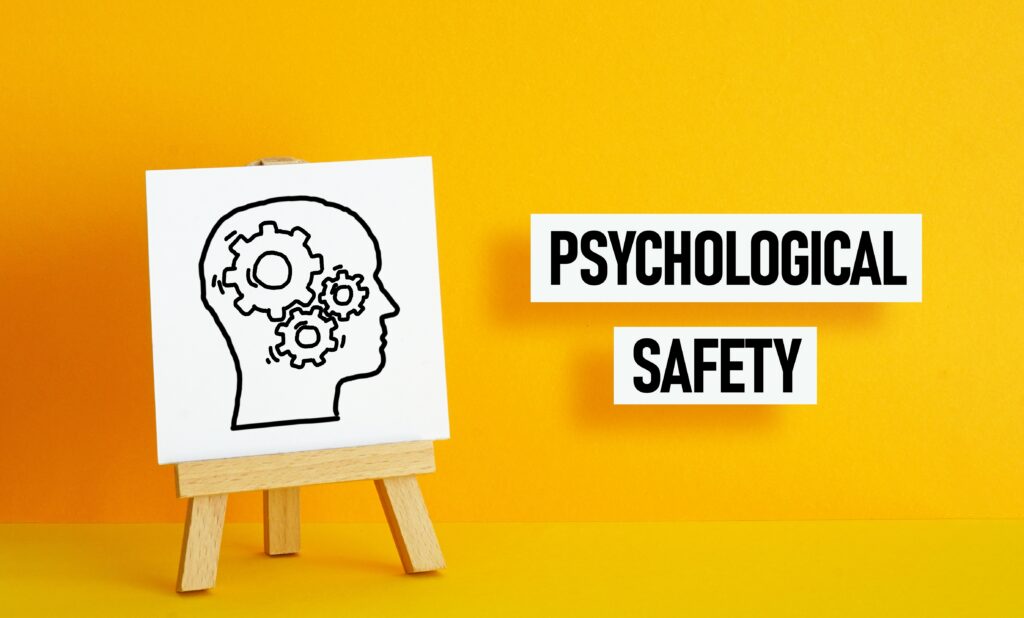
When your people feel safe to speak up, teams learn faster, spot weak signals earlier, and prevent costly incidents. Psychological safety leadership is about how you invite candor, respond productively, and set high standards without blame. In high-hazard and high-change environments like mining, construction, and oil and gas, this is not a nice-to-have. It is a performance and safety imperative. It underscores the critical role of safety leadership.
What is psychological safety at work?
Psychological safety is a shared belief that the team is safe for interpersonal risk taking. Popularized by Dr. Amy Edmondson and explored in The Fearless Organization, it means people can ask questions, admit mistakes, and challenge the status quo without fear of humiliation or retaliation. Practically, you hear more upward communication, you see faster problem solving, and you learn from near misses rather than hiding them.
Leaders often overestimate how safe others feel. Senior teams and experts can be especially susceptible to silence because status differences and reputational risk feel higher. That silence is a business risk. When operators do not surface small anomalies, those anomalies can become big incidents. Psychological safety does not lower the bar. It creates the conditions for speaking up and then holds a clear line on standards and accountability. Leaders who convey genuine care in leadership build the trust that makes this possible.
Why psychological safety matters for performance and safety
Psychological safety fuels learning behavior, which improves reliability, innovation, and safety outcomes. In psychologically safe teams, you get more ideas on how to simplify work, more high-quality conversations about tradeoffs, and earlier escalation of concerns. It also supports inclusion by making it more likely that quieter voices, new hires, and underrepresented groups contribute fully. Without it, you get workarounds, normalization of deviance, and a culture that discovers problems only after they become events. Fair processes grounded in procedural justice increase speak‑up behavior and strengthen the safety climate.
The business case spans hard and soft outcomes: fewer injuries and quality escapes, better retention, faster onboarding, and higher engagement. Pair it with high standards and you get the sweet spot where people stretch, learn, and deliver.
Leading in hybrid, distributed, and front-line contexts
Hybrid schedules, radio calls, and asynchronous tools change how risk and voice travel. Signals get lost in chat threads or shift handovers. Psychological safety leadership adapts by making speaking up explicit in every medium. You create structured turn taking in virtual meetings, use pre-commit chat prompts to gather input before the loudest voice speaks, and build short after-action reviews into shift changes. Use meaningful safety conversations to create open, blame-free dialogue. On the front line, you use briefings and walkdowns to model curiosity, ask for dissenting views, and close the loop when someone raises a concern.
8 leadership practices that create psychological safety
- Frame the work with purpose and uncertainty – Explain the why, the risks, and where you need input. Make it normal to discover and correct.
- Invite dialogue, then pause – Ask open questions, wait longer than feels comfortable, and rotate who speaks first.
- Listen to learn – Reflect back what you heard, ask for examples, and avoid jumping to solve before you understand.
- Respond productively to bad news – Thank the messenger, separate blameless reporting from accountability conversations, and clarify next steps.
- Normalize intelligent risk and learning from failure – Distinguish between preventable errors, complexity-related failures, and thoughtful experiments.
- Make dissent and debate safe – Use language like what might we be missing, and assign a rotating challenger in critical discussions.
- Spot patterns and gaps – Track who speaks, whose ideas move forward, and where silence clusters across shifts or functions.
- Recognize and reinforce – Celebrate speaking up, peer-to-peer coaching, and improvements that resulted from candor.
Psychological safety is not about being nice or avoiding tough calls. It is about creating conditions where people can tell the truth and still meet a high bar.
The 4 stages of psychological safety
Many leaders use the 4 Stages framework by Timothy R. Clark to sequence the work:
1. Inclusion Safety
People feel accepted and respected as members of the team. You pronounce names correctly, ensure everyone is introduced, and eradicate disrespectful micro-behaviors quickly.
2. Learner Safety
People can ask questions, try, and receive feedback. You make learning visible with short retros and model your own mistakes and course corrections.
3. Contributor Safety
People can contribute ideas and do meaningful work. You define clear roles, connect tasks to purpose, and invite improvement suggestions.
4. Challenger Safety
People can challenge the status quo without negative consequences. You explicitly ask for counterarguments before decisions, protect respectful dissent, and welcome upward feedback on leadership behavior. Progress through these stages builds capacity for innovation and resilience.
Measure and develop psychological safety with data
You cannot improve what you do not measure. Use direct measures of voice and learning behavior, and assess the specific leadership habits that enable them. Our data-driven Safety Leadership 360 Tool gathers multi-rater feedback on behaviors like Influencing Others and Listening to Learn. Our Safety Culture Survey measures how people feel in the organization through scales such as Leader-Member Exchange and Perceived Organizational Support. The results of those tools highlight strengths, reveal blind spots, and give you a targeted plan to practice and track either at an individual leader or organizational level.
Leaders accelerate change with focused learning experiences and coaching. Krause Bell Group offers research-backed webinars and masterclasses like the Operational Leader Masterclass: 7 Insights, plus tailored consulting for culture and safety performance. Our team helped organizations, including NASA after the Columbia tragedy, build the leadership and culture to surface weak signals earlier and act on them.
FAQs
Start building psychological safety now
If you want a focused way to practice the right behaviors, start with a baseline using the Safety Leadership 360 Tool, then embed new habits through our masterclasses and targeted coaching. If you need a system-level approach that aligns leadership, operations, and culture, explore our consulting services. Leading with psychological safety is how you get more truth in the room and better outcomes in the field.
* Developed with the support of AI and reviewed by Krause Bell Group Editorial Team